

Feeding an Overweight Dog
Feeding an overweight dog
Nearly half of dogs are overweight and most owners cannot see it. How to check, why cutting the normal food in half is the wrong fix, and what works over the months it takes.

Check first
Overweight begins at 10% above ideal weight, obese at 20%. Feel for the ribs under gentle pressure; if you cannot, the dog is carrying too much. The figure check and the 10% rule. Your vet can give a body condition score and rule out thyroid and adrenal causes.
Why halving the bowl fails
Cutting the normal food in half cuts the protein, vitamins and minerals in half too, and leaves a hungry dog that begs and scavenges. A weight-loss food is lower in energy but higher in protein and fibre, so the portion stays full, muscle is kept, and the dog feels fed.
The plan
Feed to the target weight, not the current one, in grams on a kitchen scale.
Treats are the easiest calories to remove. Use pieces of the daily ration for training, or a low-calorie care snack counted in.
Longer and more frequent walks, built up slowly in a dog carrying a lot.
Aim for 1 to 2% of body weight a week. That means months, not weeks, and the check-ins are what keep it going. A 2015 study found the diet is on average cost-neutral once scraps stop.
After neutering
Metabolism and behaviour change straight away; feeding usually does not. The two years after neutering are the highest-risk window for weight gain, so switch to a lighter recipe or reduce the ration at the time, and weigh monthly.
The recipes
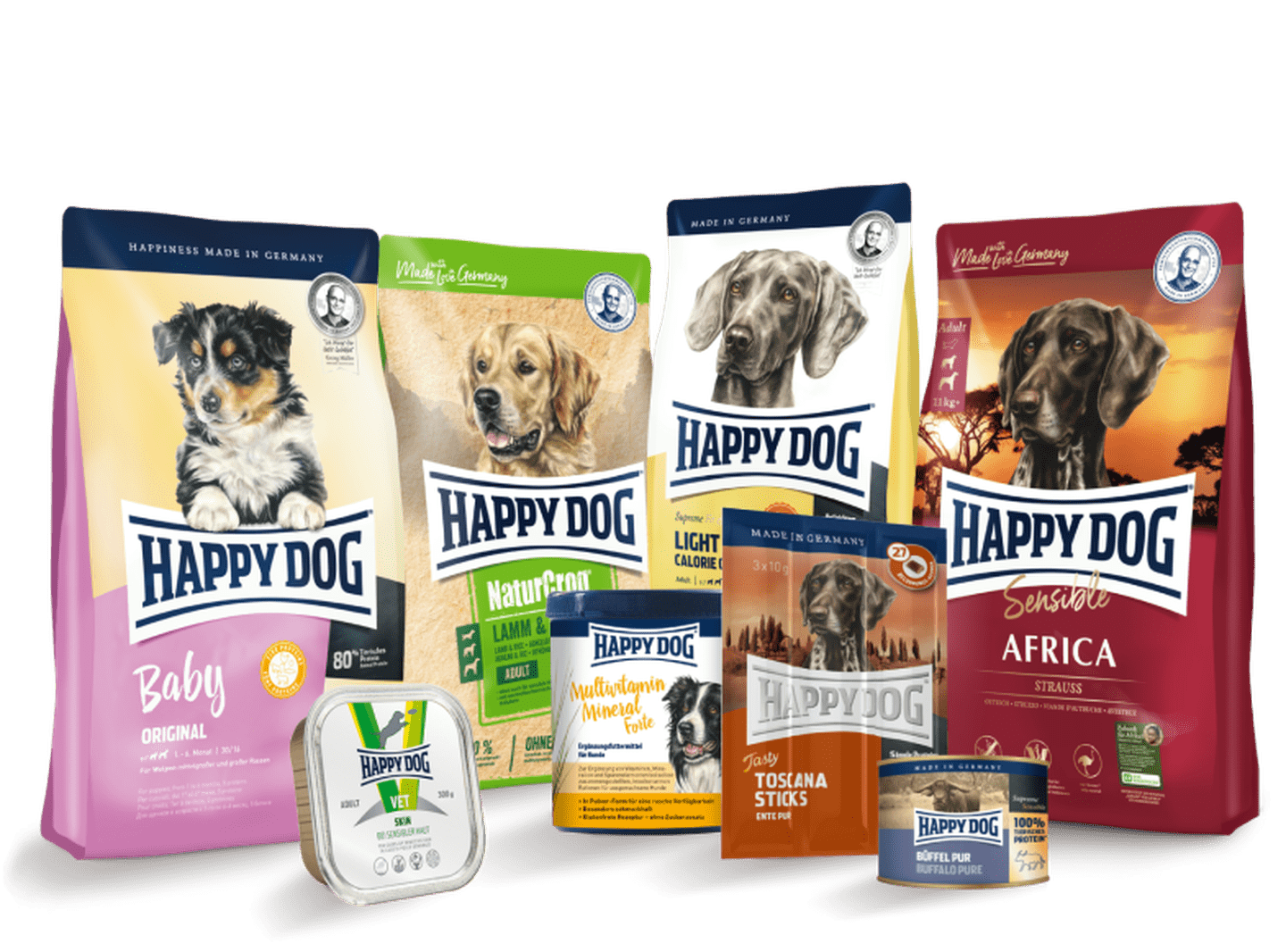
 Light Calorie ControlCalorie control
 Mini LightUnder 10 kg
 Low Fat Duck & Salmon (Toscana)Low fat, duck and salmon
 Healthy Weight Care SnackLow-calorie snack
 VET AdipositasVet weight-loss diet
 VET Snack Weight ControlVet snack
VET Adipositas is the dietetic diet for dogs with a lot to lose, fed on your vet's recommendation; we stock it in dry and wet.
- your dog is very overweight, elderly, or has joint or heart problems
- weight has changed quickly without a change in feeding
- your dog drinks or urinates more than usual, or has a pot belly with thin legs
Based on "Diet management strategies" by Cornelia Günther, veterinarian, Happy Dog veterinary team.
Not sure what to feed your dog?


What is your dog’s name and what breed are they?
What’s the main issue affecting your dog?
Choose the one that feels most important right now.
Has your dog reacted to any foods in the past?
Select all that apply.
Has your vet diagnosed any conditions for your dog?
Select all that apply.
What symptoms are you seeing day-to-day with your dog?
Select all that apply.
How old is your dog?
We’ll match them to Puppy, Junior, Adult or Senior automatically.
